We're excited to invite you for a showing of Gwen Stefani's entire line of Sunwear and Eyewear! Please come by Friday, July 2 11:00am-12:00 noon. We will have on display the fun and colorful frames for you to see and try on. Bring a Friend!


|
We're excited to invite you for a showing of Gwen Stefani's entire line of Sunwear and Eyewear! Please come by Friday, July 2 11:00am-12:00 noon. We will have on display the fun and colorful frames for you to see and try on. Bring a Friend!
0 Comments
Hello!
I hope all of you are staying safe as this pandemic apparently is winding down! I want to announce regarding our office that the entire office staff including the doctor have been fully vaccinated! So you can feel safe coming into our office regarding that. The California mask mandate has been extended to June 15, 2021, so we will be wearing masks in the office until June 15, 2021. As a patient, if you have been fully vaccinated and you would prefer not to wear a mask, we are ok with that. The science community has reported that those who get the vaccine are unable to spread COVID, so if the entire office staff has been fully vaccinated, and the patient has been fully vaccinated, it just makes common sense. Effective June 1, 2020, we are back to normal business hours! However, we do require that you wear a mask when entering the office, and that you maintain social distancing(6 foot distance) when approaching another person. We also have hand sanitizer for your convenience. Welcome back!
WE ARE CURRENTLY OPEN WITH REDUCED OFFICE HOURS! Our hours are:
Monday--Friday 10-4 Saturday 10-3 We ask that you wear masks when entering our office and practice social distancing, staying 6 feet apart from others. We do have hand sanitizers for your convenience. Thank you! As per recommendations from our local public health experts, we are strongly recommending that you reschedule any routine eye exams you have scheduled with our office. Our local health experts have stressed the next two weeks are the most critical and are discouraging any travel away from home. We are open and available for emergency and urgent care needs. We have reduced our hours, and have implemented strict sanitizing guidelines. California appears to be flattening the curve, let's keep up the good work and be diligent with our social distancing!
Thank you for your understanding! The state of California, as a result of the COVID-19 pandemic, has declared a statewide stay at home policy except for essential services. Doctor's offices are on the list of essential services, and as a result, we shall remain open for emergent optical care. This includes broken or lost glasses, re-ordering of contact lenses, red eyes, and the like. We will be adding additional measures to the current office policy:
1. We will be following the CDC guidelines of no more than 10 people at a time in the office. If the office reaches that maximum, you will be asked to wait in your car until the office occupancy falls below 10. 2. We have added hand sanitizers in the office, and we encourage you to use them frequently. 3. We are also practicing social distancing. Thank you for your understanding! The year 2020 has arrived--it's the year of the optometrist! To celebrate this, we are offering a special sale all year long! On the 20th day of every month, we will offer you 20% off any frames you buy! Just come in on the 20th day of the month, and tell us you want the 2020 special, and we will give you 20% off the frames you buy that day!
It's the year of the optometrist--stop by today! Hello, again! We have done a soft office remodel, as we have installed new carpeting and new paint, giving the office a needed refresh. See pictures below. Unlike most other doctor offices who have remodeled recently, we decided to stay with carpeting for our floor. Carpet a ga ga, somebody still loves you! 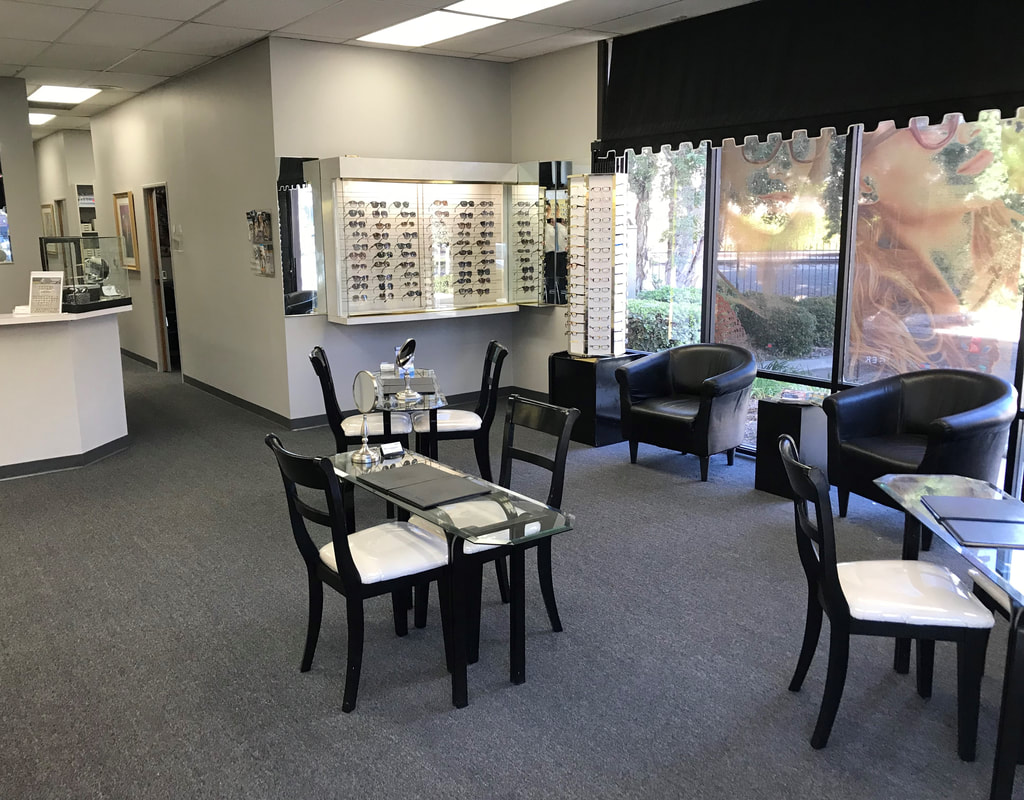 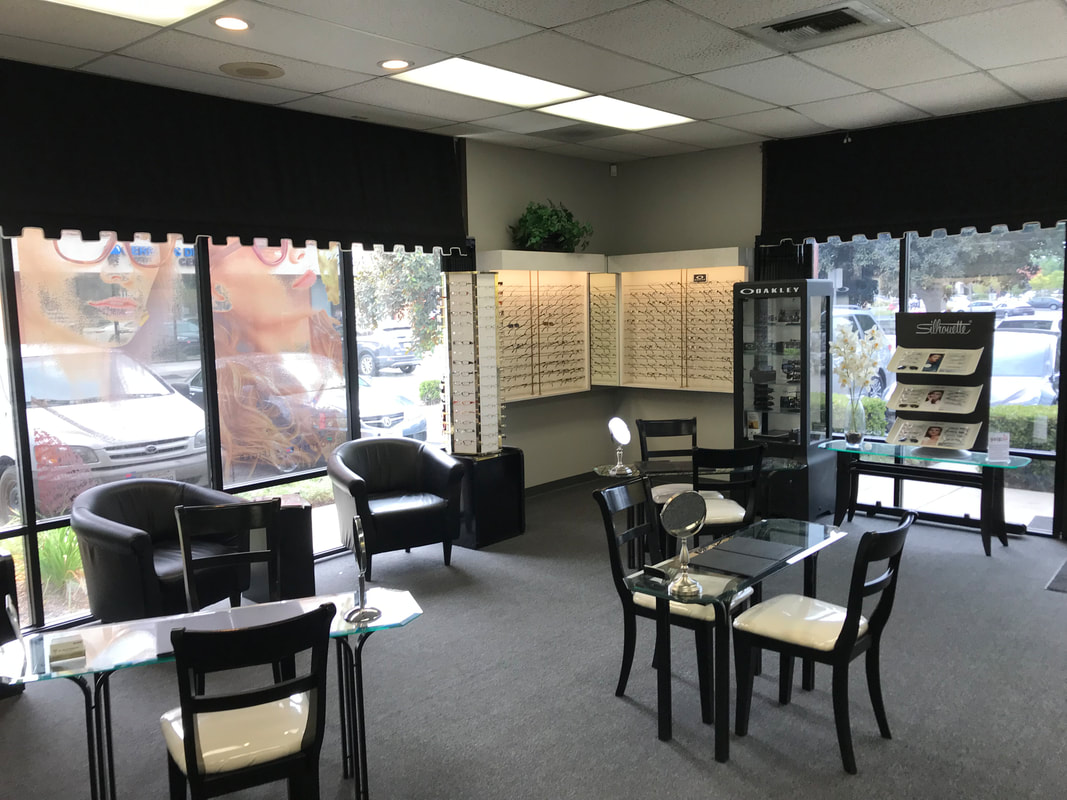 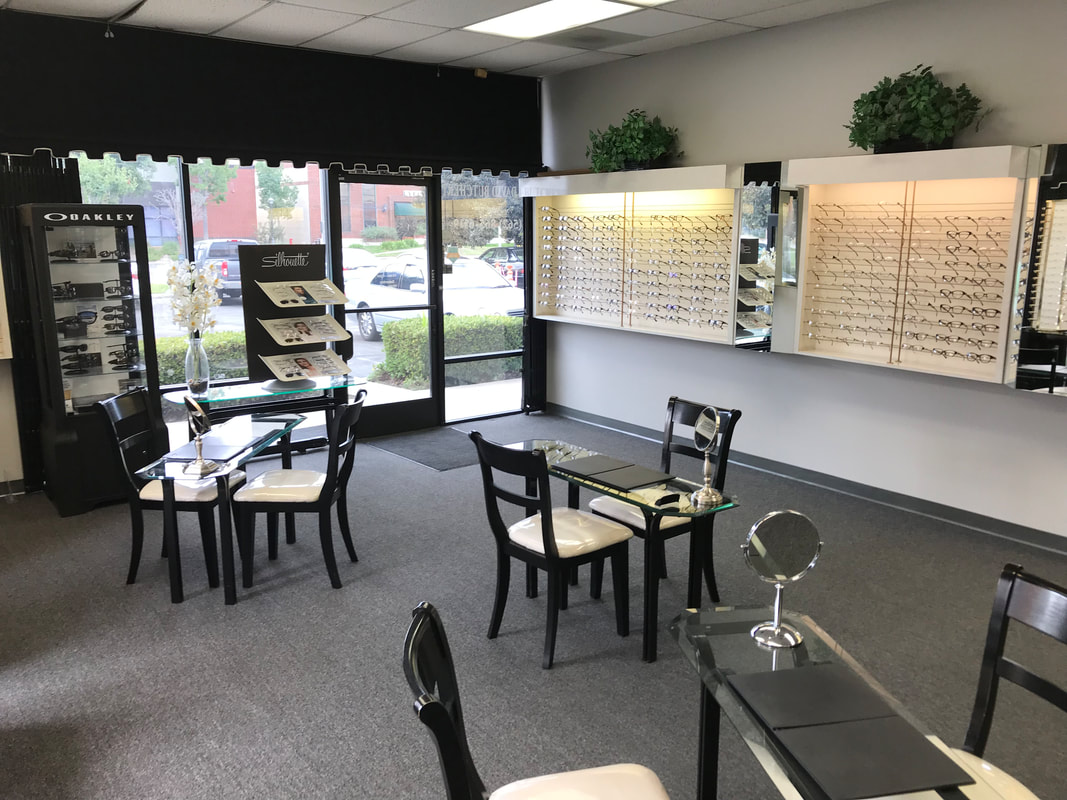 One question that I get asked quite a bit is what food is healthy for the eyes? Look no further(no pun intended)! In this blog, I will discuss all you need to know about nutrition for the eyes.
Which foods should you eat for the health of your eyes? The answer is...eat a variety of colors every day. Different colors of fruits and vegetables have different nutrients. Let's talk about the most important, as we break it down by colors. GREEN. Leafy greens. This would include spinach, lettuce, kale, collards, mustard greens, and swiss chard. Not only are these foods high in fiber, folic acid and iron, they are also high in antioxidants, specifically the carotenoids lutein and zeaxanthin, both of which are stored in the macula and act like a sunblock to protect the retina and macula from damaging light. ORANGE. Carrots, orange bell peppers, sweet potatoes, egg yolks. You've always heard that carrots are good for your eyes? It's true. Beta-carotene, which gives these foods their orange hue, is a carotenoid that the body breaks down into vitamin A. Beta-carotene has been shown to slow the progression of age related macular degeneration when eaten in combination with other nutrients(zinc, vitamin E, Vitamin C ,and copper). In the U.S., most chickens are fed supplements of beta-carotene to give their flesh and their egg yolks a more golden hue, but it also gives those who eat eggs an extra nutritional boost. Vitamin A helps the retina produce melanin, which is a pigment that protects the eyes from sun damage. FISH. Tuna, salmon, mackerel, sardines, anchovies. These are all high in omega-3 fatty acids, one of which(DHA) is a major building block of the retina, as well as the brain and skin. Half of the retina's photoreceptors--rods and cones--are made up of omega-3 fatty acids! As a result of this, a diet rich in omega-3 fatty acids is recommended, especially those who have macular degeneration. Now, it is worth noting that a study came out recently that concluded that omega-3 fatty acids produced in pill form were not effective in countering the effects of macular degeneration. So based on this, I recommend consuming omega-3 fatty acids from natural sources--fish. Those are the big three. Other sources of natural ocular nutrition: BLACK CURRANTS, CHERRIES, DARK BERRIES. These foods contain Anthocyanins. This is a flavonoid responsible for giving these fruits their deep purple, blue, and red colors. It has been shown to protect the retina and they may also reduce cataracts in those who have diabetes. The vitamin C in these fruits is also a powerful antioxidant. ALMONDS, PISTACHIOS, SEEDS, WHEAT GERM. These foods are all exceptionally high in vitamin E, an antioxidant that has been shown to reduce the progression of macular degeneration and cataract formation. If you are watching your weight, you need to be careful when eating these foods--nuts are high in calories. Personally speaking, every time I eat a Kind bar, I always seem to gain two pounds. So there you have it! These are the foods that are best for your eyes. Even though many of these vitamins and nutrients are available in pill form, I feel that it's best to consume them naturally, through organic foods. |
Dr. David Butchert, O.D.Optometrist for 28 years. Contact lens wearer for 39 years. Glasses wearer for 41 years. Archives
June 2021
Categories |
|
Dr. David Butchert, O.D.
11847 South St Cerritos, CA 90703 Phone: 562-865-6119 Fax: 562-865-4665 |

|

 RSS Feed